Best Matter-Compatible Smart Plugs for Any Ecosystem
The best Matter-compatible smart plugs are the ones that carry an official Matter certification, connect over the protocol your home already supports (almost always Wi-Fi for plugs today), and offer a feature like energy monitoring or a second outlet if you need it. Because Matter is a shared standard, a certified plug from brands such as TP-Link Tapo/Kasa, Eve, Meross, SwitchBot, Aqara, or Leviton will pair with Amazon Alexa, Google Home, Apple Home, and Samsung SmartThings using the same QR code—so the “best” plug is less about the logo and more about confirming certification and matching its radio to your setup.
What “Matter-compatible” actually means for a smart plug
Matter is an application-layer standard from the Connectivity Standards Alliance (CSA). When a plug is certified, it speaks a common language that every Matter controller understands, which is why the same device can be added to Alexa, Google Home, Apple Home, or SmartThings without a brand-specific bridge. For a smart plug, the certified device type is simple—on/off, and sometimes energy reporting—so support across platforms tends to be more reliable than for complex devices like cameras or thermostats.
The important nuance: “Works with Alexa” on a box is not the same as “Matter certified.” A plug can work with Alexa through the manufacturer's own cloud integration and have nothing to do with Matter. If cross-ecosystem flexibility is your goal, look specifically for the Matter wordmark and verify the listing. We cover how to confirm this in how to tell if a device is Matter-compatible before you buy.
Wi-Fi vs. Thread: the choice that matters most
Matter runs over different network transports, and for smart plugs this is the single biggest practical decision. The vast majority of Matter plugs on the market today are Matter over Wi-Fi. They join your existing 2.4 GHz network and need no hub at all—just a Matter controller (an Echo, Nest, Apple Home Hub, or SmartThings hub) to commission and route them.
Matter over Thread plugs are less common but bring a low-power mesh that can extend coverage. A mains-powered plug on Thread is especially useful because it acts as a Thread router, strengthening the mesh for battery devices like sensors. The catch is that Thread requires a Thread border router in your home. Many people already own one inside a recent Echo, Nest, Apple TV, or HomePod—see the Thread border routers you may already own. If you're weighing the two transports broadly, our Matter over Wi-Fi vs. Matter over Thread comparison goes deeper.
- No hub needed beyond a Matter controller
- Widest selection and lowest prices today
- Uses 2.4 GHz Wi-Fi airtime and your router’s device count
- Needs a Thread border router in the home
- Extends the Thread mesh as a mains-powered router
- Fewer models available, often at a premium
Features worth paying for
Once certification and radio are settled, the differences come down to hardware. These are the features that change day-to-day usefulness:
- Energy monitoring. Some plugs report wattage and cumulative kWh. This is genuinely useful for spotting power-hungry appliances—but note that as of writing, Matter's standardized energy reporting is still maturing, so detailed consumption data may only appear in the manufacturer's own app rather than in Alexa or Google Home.
- Physical button. A manual on/off control on the plug itself means you (or a houseguest) can toggle the outlet without an app, which matters during network hiccups.
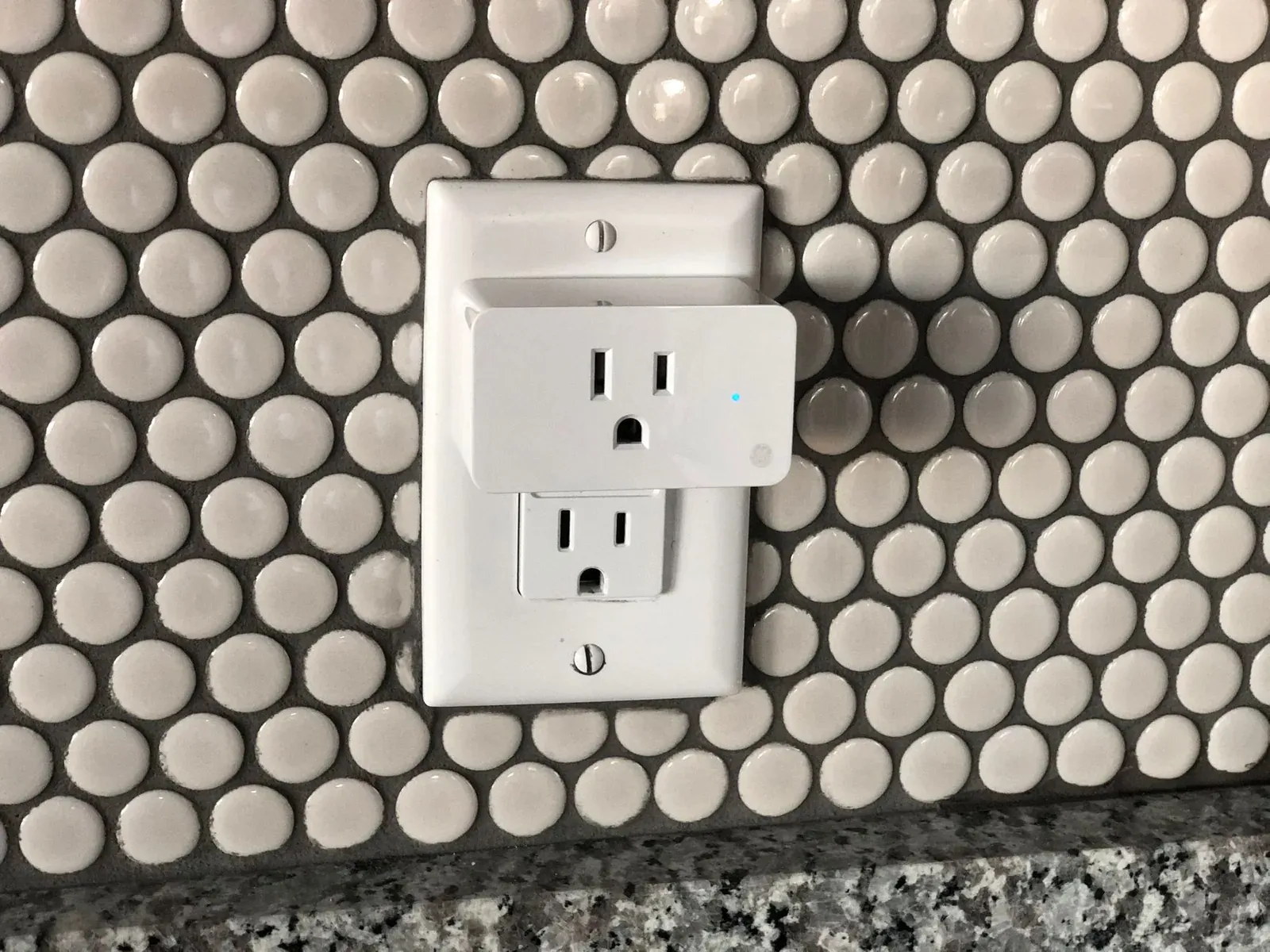
- Form factor and spacing. A compact body avoids blocking the second outlet on a wall plate. Some “plugs” are actually dual-outlet or power strips that expose each outlet as a separate Matter device.
- Indoor vs. outdoor rating. Outdoor plugs are weather-sealed and often have two independently controlled sockets for holiday lighting.
- Maximum load. Most plugs handle up to roughly 15 A / 1,800 W in the US, but high-draw appliances (space heaters) deserve a quick spec check.
Notable certified options across ecosystems
The brands below are widely available and ship Matter-certified plugs. Exact model availability changes often, so treat this as a starting point and confirm the current SKU is certified before buying. We don't run a testing lab, so the notes here reflect manufacturer documentation and the device's published feature set—not bench results.
| Brand line | Typical transport | Stands out for | Worth knowing |
|---|---|---|---|
| TP-Link Tapo / Kasa | Matter over Wi-Fi | Low price, wide availability, mini form factor | Confirm the specific model lists Matter; not all Tapo/Kasa plugs are certified |
| Eve Energy | Matter over Thread | Thread mesh extension, energy monitoring | Needs a Thread border router; long-standing Apple Home pedigree |
| Meross | Matter over Wi-Fi | Budget plugs and outdoor models | Some require a firmware update to enable Matter |
| SwitchBot | Matter over Wi-Fi | Energy monitoring, integrates with SwitchBot ecosystem | Advanced features may stay in the SwitchBot app |
| Aqara | Matter (varies by model) | Strong sensor ecosystem pairing | Check whether the plug is natively Matter or bridged through an Aqara hub |
| Leviton | Matter over Wi-Fi | US electrical-brand build quality | Often pricier; decora-style aesthetics |
How to add a Matter plug to your ecosystem
The commissioning flow is nearly identical regardless of platform, which is one of Matter's real wins. You scan one code and the controller does the rest.
- 1Plug in the device and locate its Matter QR or 11-digit setup code on the plug or in its leaflet
- 2In the Alexa, Google Home, Apple Home, or SmartThings app, choose to add a device and select the Matter option
- 3Scan the code and follow prompts; the controller commissions the plug onto your network
- 4(Optional) Use multi-admin to share the same plug into a second ecosystem
Because the plug is built on an open standard, you aren't locked to the first app you used. With Matter multi-admin you can share one plug across Alexa, Google, and Apple at the same time—handy in households where people use different phones. If a code refuses to scan, our guide to fixing a Matter QR or pairing code walks through the usual causes.
Do you even need Matter for a plug?
If you're committed to a single ecosystem forever and never plan to switch, a non-Matter plug from that platform's preferred brand can work fine and sometimes costs less. But Matter buys you portability and local control. Many Matter plugs respond locally to a hub on your network, which can keep basic on/off working even when the internet is down—see do Matter devices need the internet to work. For a level-headed take on whether the standard is mature enough to commit to, read is Matter worth it in 2026.
Frequently asked questions
Do Matter smart plugs need a hub?
Wi-Fi Matter plugs don't need a dedicated hub, but they do need a Matter controller to commission and control them remotely—typically a recent Echo, Nest, Apple Home Hub, or SmartThings hub. Thread-based plugs additionally require a Thread border router, which is often already built into one of those same devices.
Will the same plug really work in Alexa and Apple Home at once?
Yes. Matter's multi-admin feature lets a single certified plug be shared into multiple ecosystems simultaneously. You commission it in one app, then generate a new pairing code from within that app to add it to the next platform.
Why doesn't my plug show energy usage in Google Home or Alexa?
Matter's standardized electrical-measurement reporting is still rolling out across platforms. Many plugs measure energy but expose those readings only in the manufacturer's own app for now. If detailed consumption tracking is essential, check that both the plug and your platform support it before buying.
Is a Thread plug better than a Wi-Fi plug?
Not universally. A Thread plug helps extend a low-power mesh for sensors and locks, which is valuable if you have many Thread devices. But it requires a border router and there are fewer models. For most people who just want reliable on/off across ecosystems, a certified Wi-Fi plug is the simpler choice.